End-to-End Design | Healthcare | Mobile UX/UI | Award Winning Design
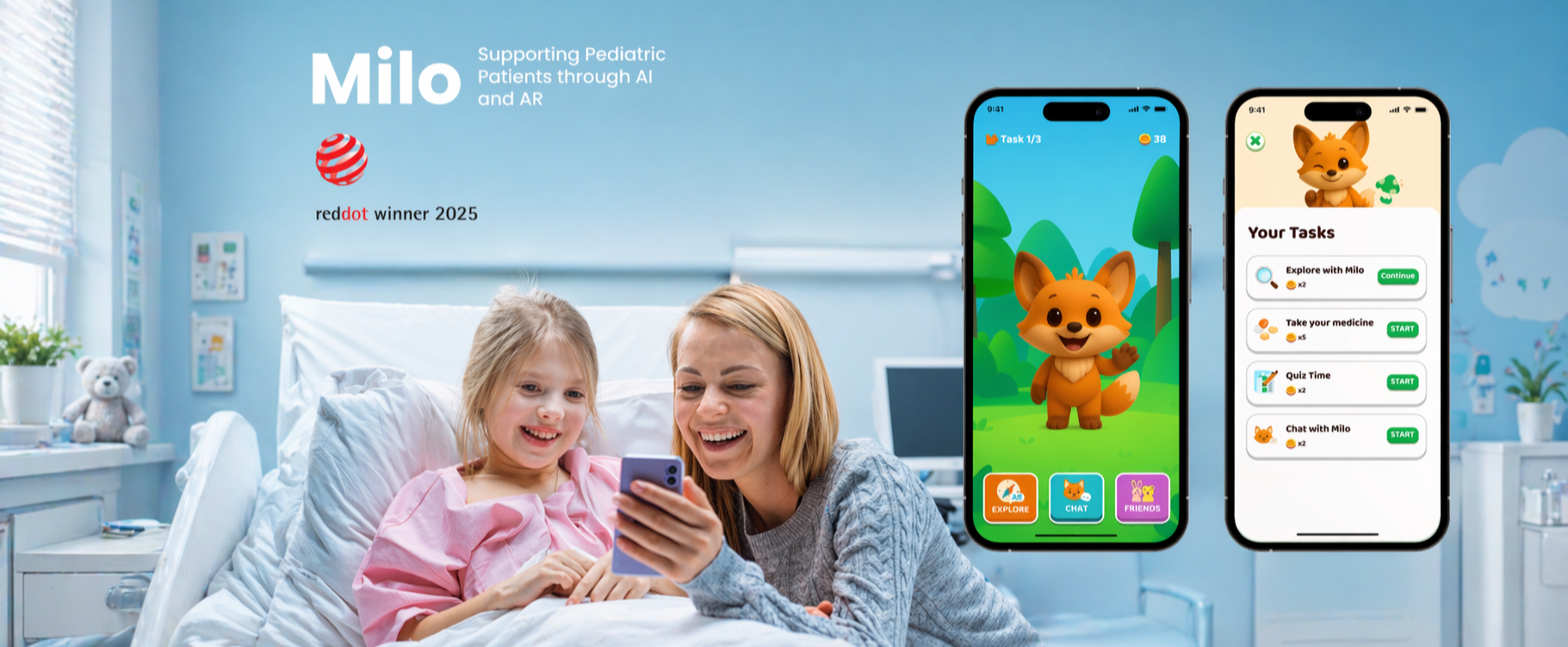
Milo - Supporting pediatric patients through AI and AR
Role
UX designer
UI designer
Illustrator
Timeline
5 month
Tools
Figma
Adobe Illustrator
Team
3 UX Designer
🔸 Overview
The Opportunity
Children in long-term hospital care often face isolation, emotional distress, and limited opportunities for play and social connection, creating an opportunity to design a more supportive and engaging care experience.
The Solution
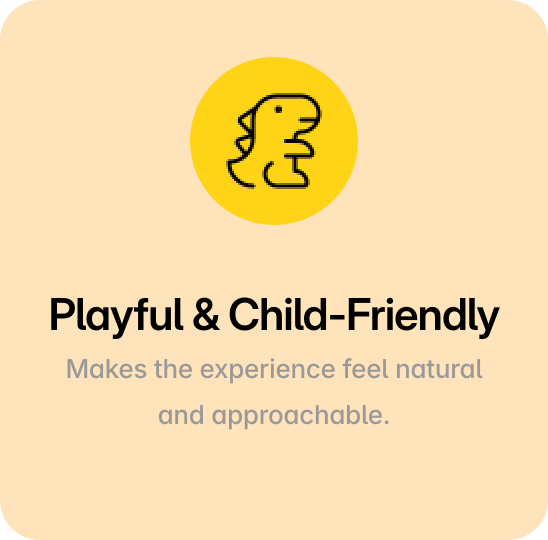
We designed a child-centered hospital app that supports emotional well-being, encourages social connection, and creates more engaging daily experiences for children during long-term care.
🔸 The Problem
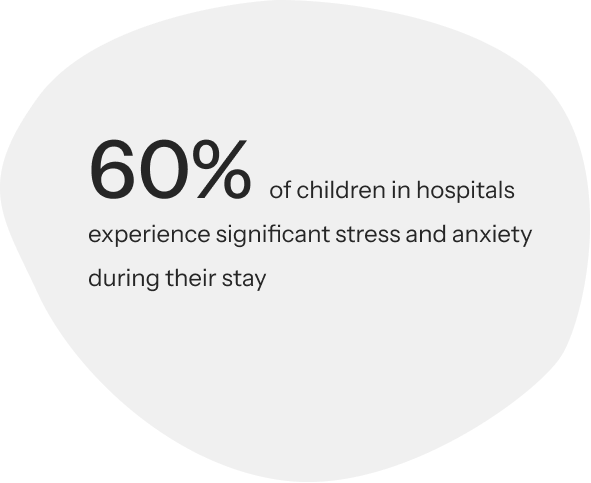
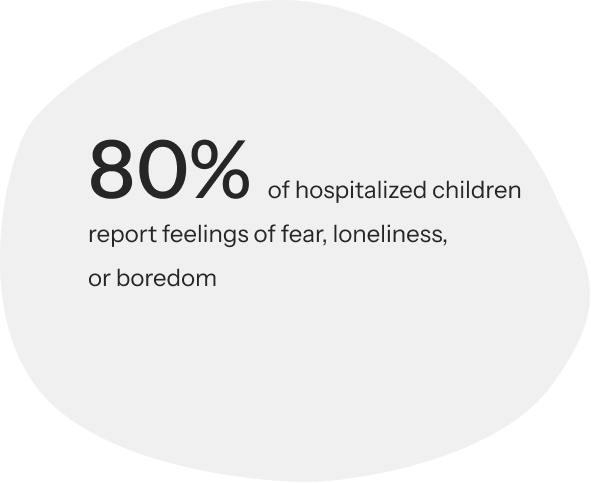
Extended hospital stays leave many children feeling isolated, anxious, and disconnected.
Separated from familiar routines, environments, and support systems, children often struggle to understand what they are going through. Without clear ways to express their emotions or stay connected, the hospital experience can feel confusing and overwhelming.
🔸 Competitor Analysis
No Perfect Solution Exists in the Market
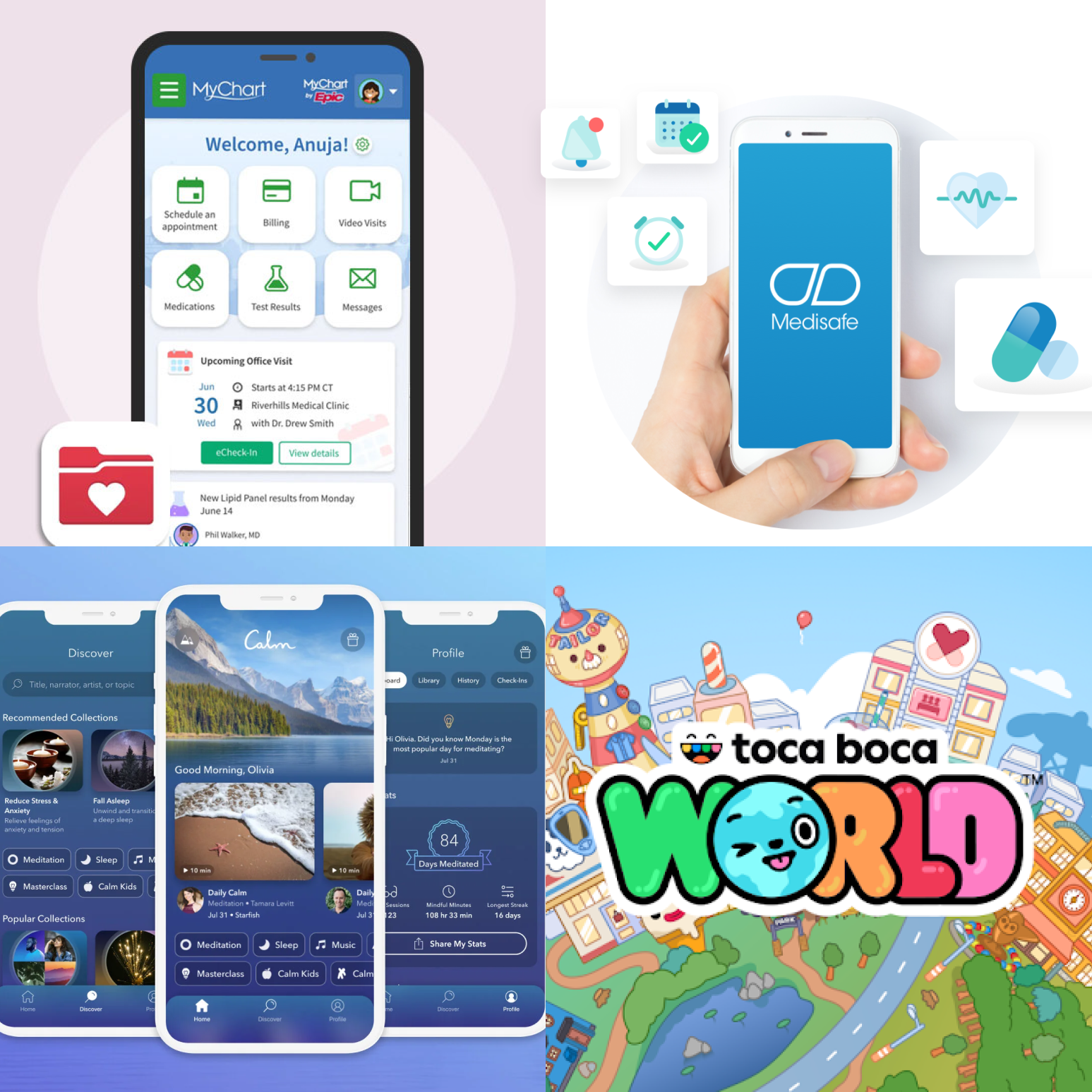
To understand the market and identify existing or similar apps, I conducted a competitor analysis. My goal was to investigate what features are currently working or not working for competitors and to identify opportunities to differentiate my app. Through this analysis, I identified four apps that are either directly or indirectly related to my goal of helping college students establish friendships.
I found out that most of them are: 1. Focusing on dating, 2. Not secure & safe, 3. Not designed for college students, 4. Have unnecessary features
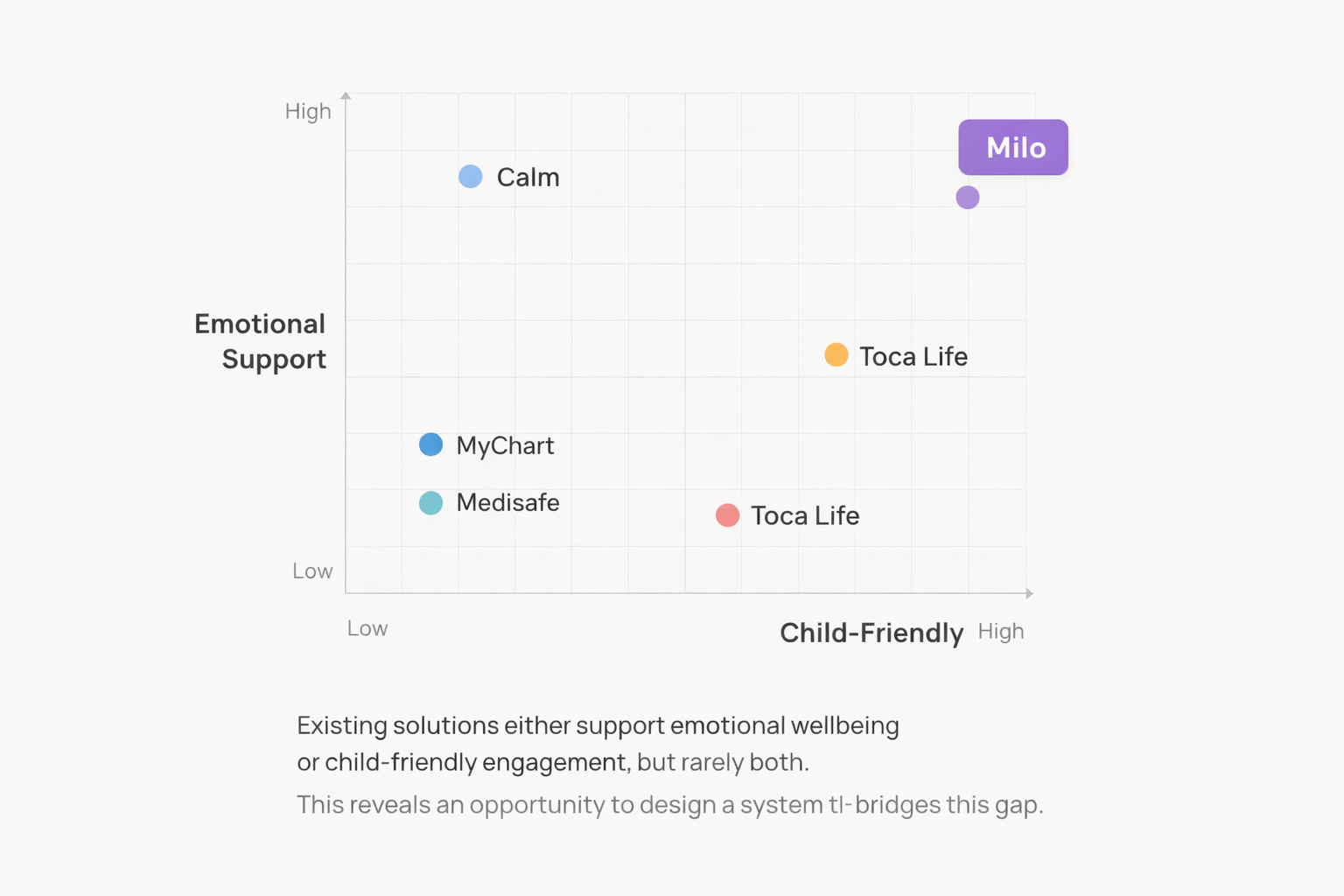

🤔How might we help children feel connected without overwhelming them?
🔸 Design Decisions
🔸 Ideation
Character Exploration
We explored 10+ character directions to find a personality that feels comforting, engaging, and appropriate for children in care.
We decided on Milo, a red fox, for its warmth, friendliness, and playful yet calm presence.
Concept Exploration
We explored multiple directions to address emotional connection and engagement based on our research and users.
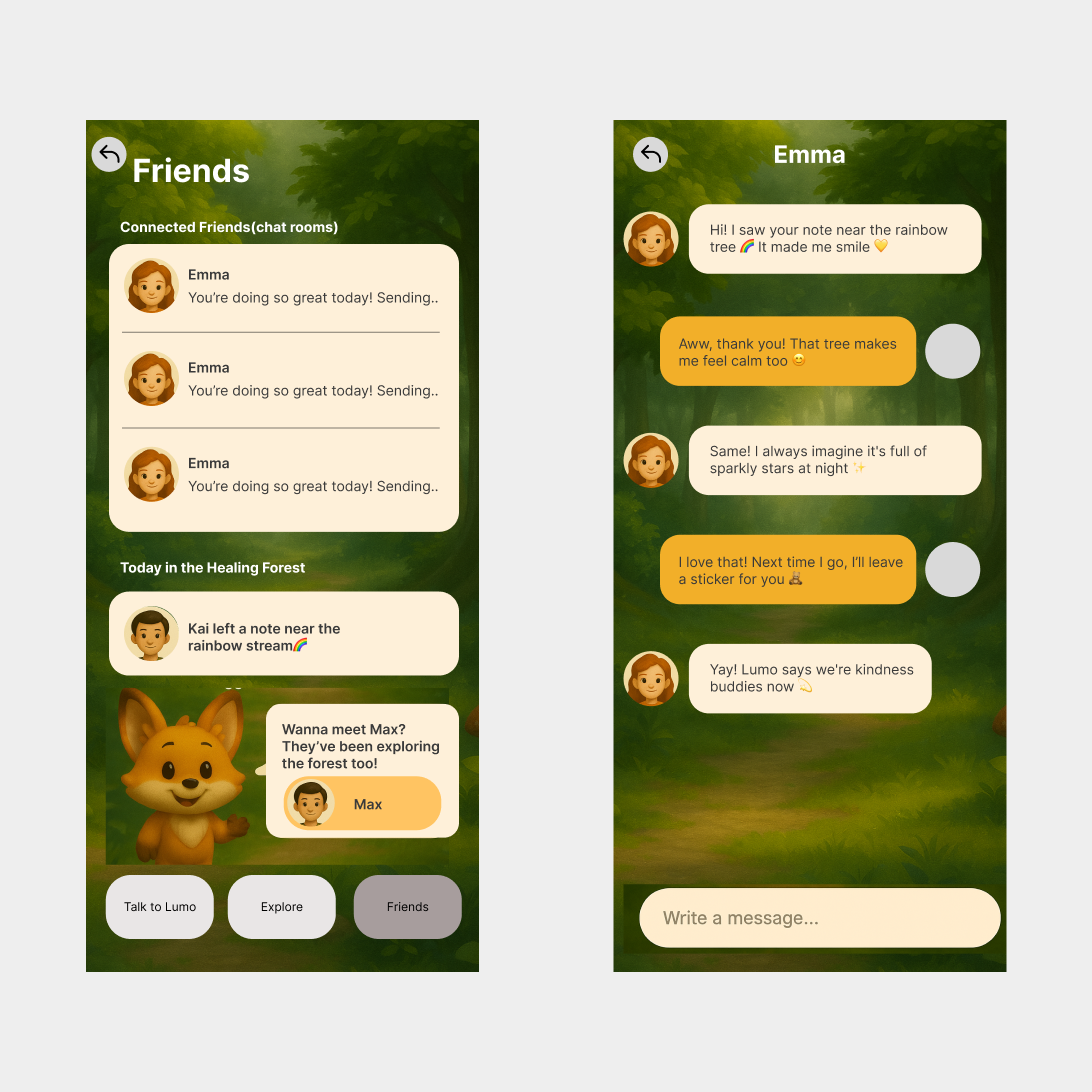
🔹 Concept 1
Peer Connection
Connect children with others in similar situations.
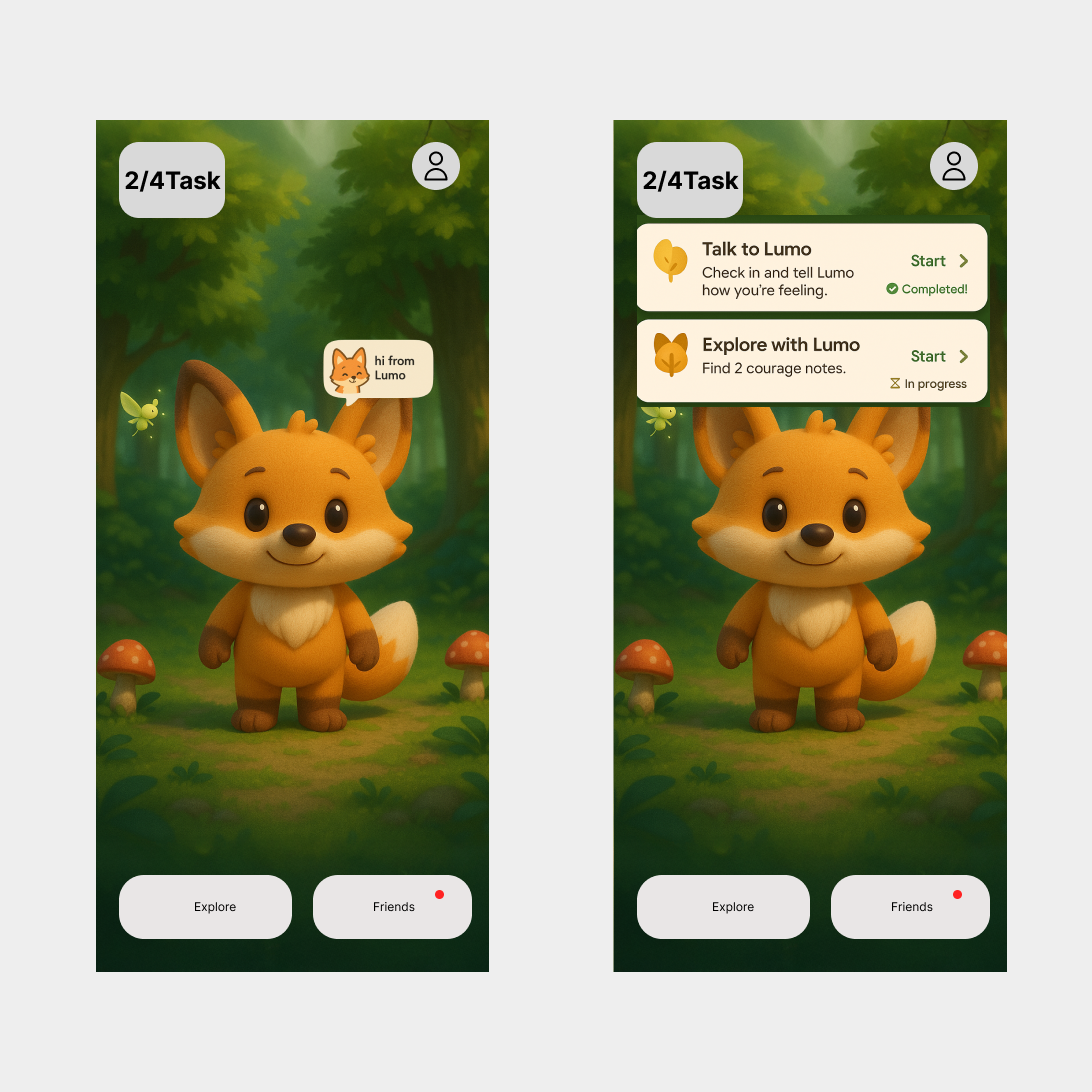
🔹 Concept 2
AI Companion
A responsive character that interacts and provides emotional support.
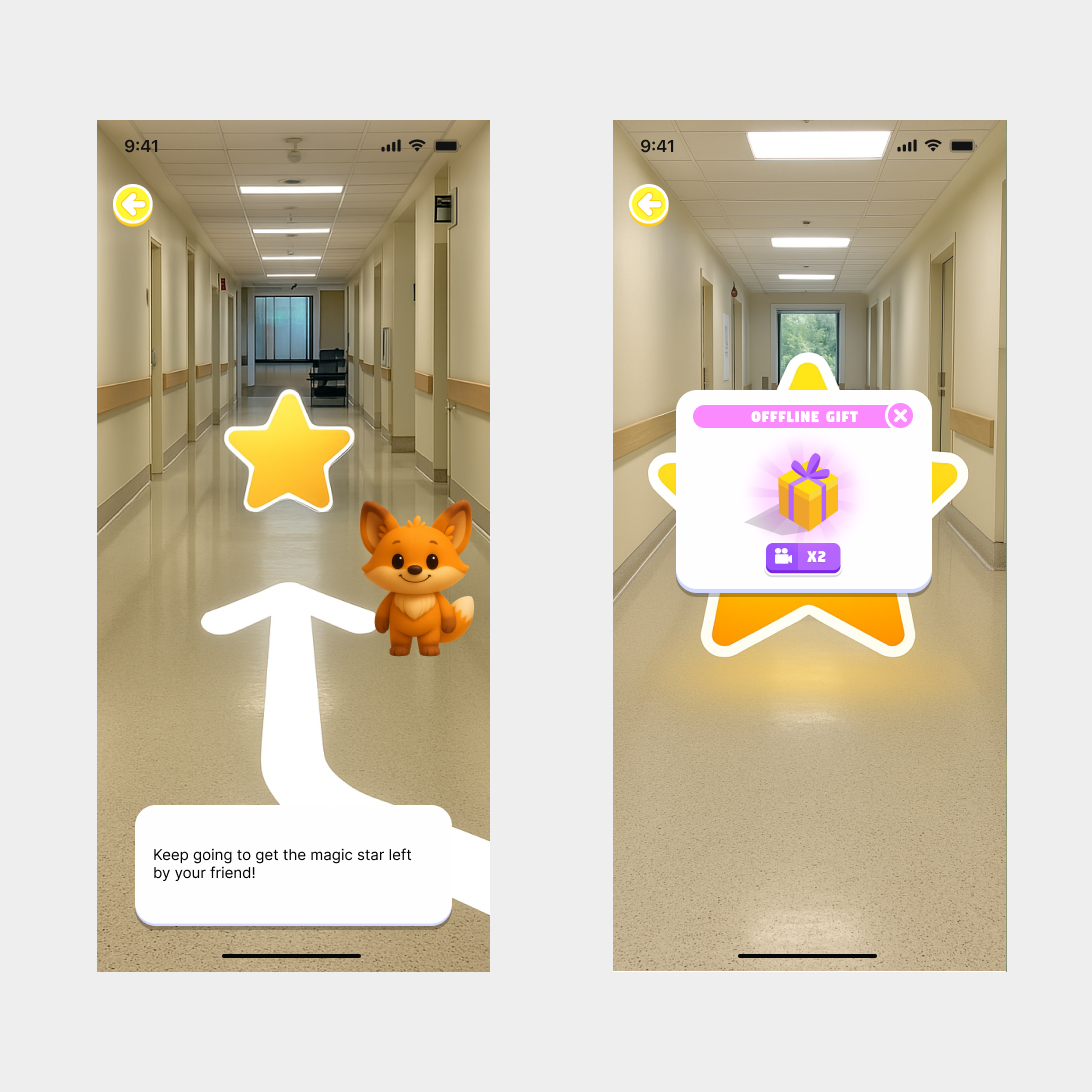
🔹 Concept 3
Interactive Activities
Play-based activities designed to engage and distract.
🔸 Solution
Product Overview
Milo is an interactive companion system designed to support emotional connection and engagement for children in long-term care.
Core Features
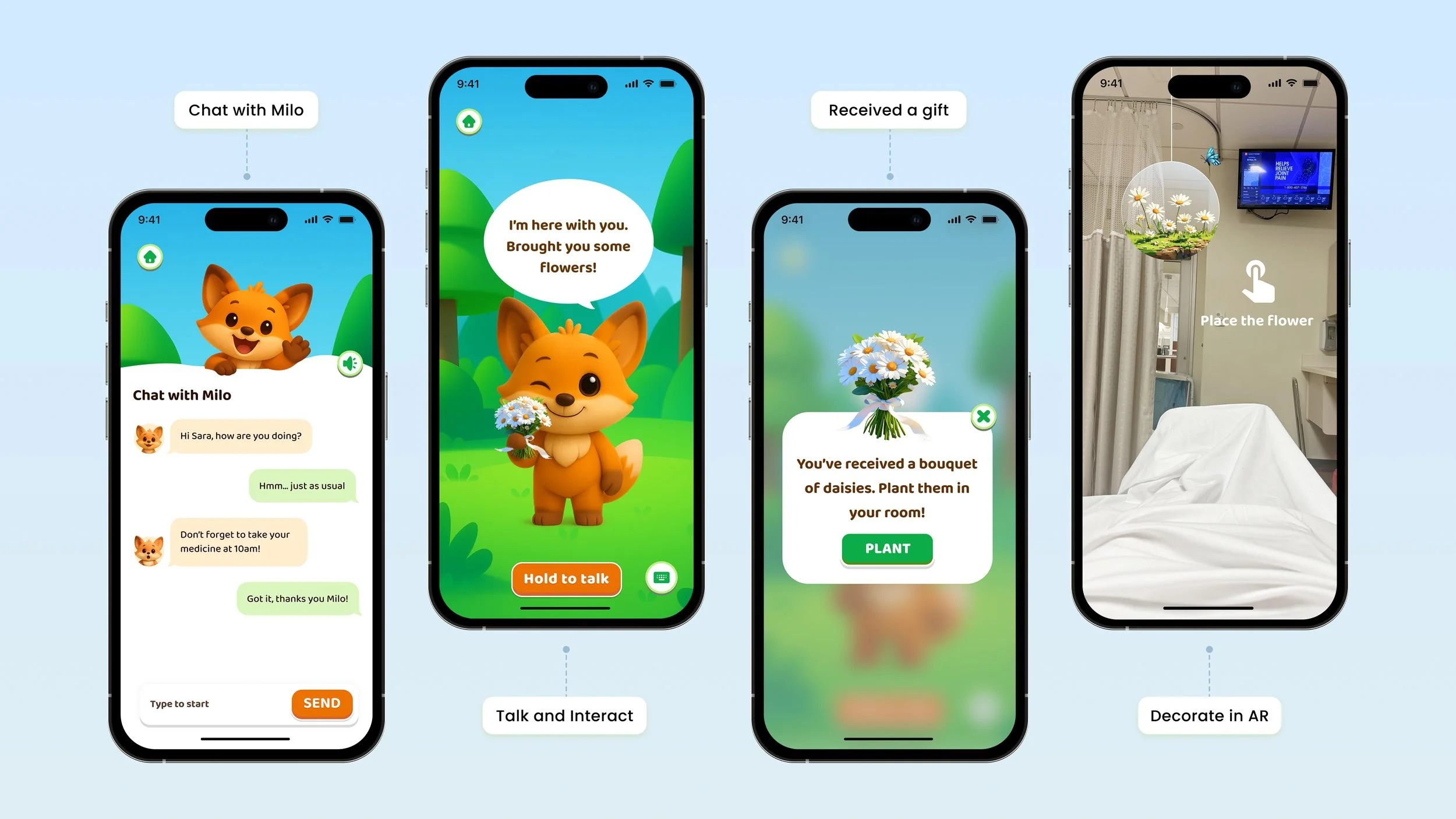
🧡 AI Companion — Milo
What it does
A responsive character that interacts and supports emotional wellbeing.
🎮 Interactive Activities
What it does
Play-based experiences that keep children engaged.
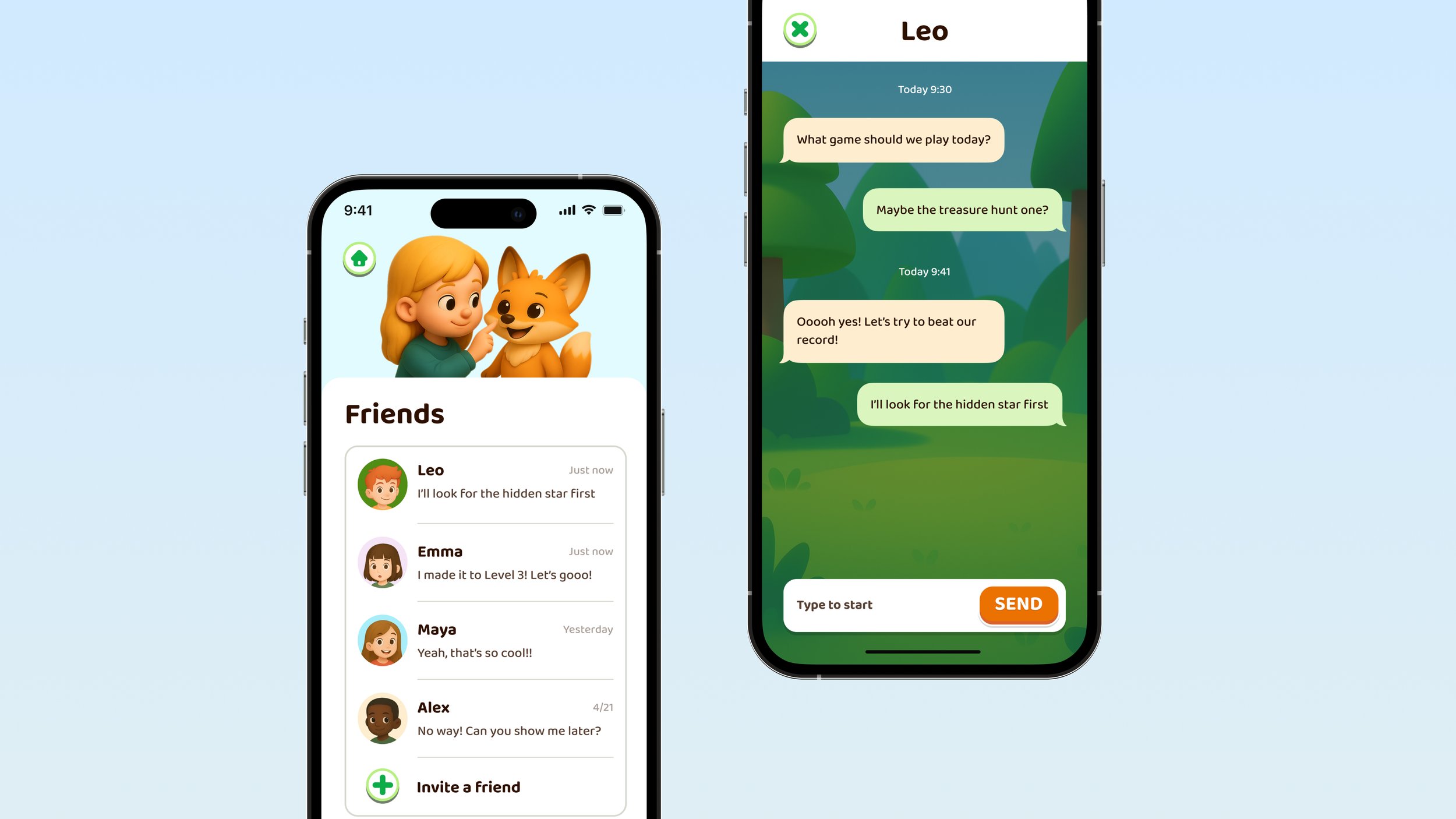
🌐 Social Interaction
What it does
Allows children to connect with others through safe, lightweight interactions.
🔸 Iteration & Challenges
😥 Children often experience fatigue or limited mobility during treatment, making it difficult to engage with full mobile interactions.
⌚ Introducing Wearable Interaction!
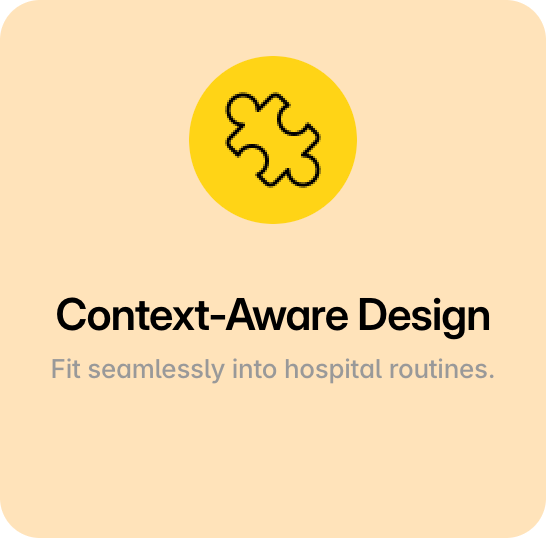
To address this, we explored lightweight interaction through Apple Watch, allowing Milo to deliver simple prompts, reminders, and encouragement in a more accessible format.
✅ Outcome
This enables quick, low-effort interactions that fit naturally into care routines, supporting engagement without adding cognitive or physical burden.
🔸 Final Design
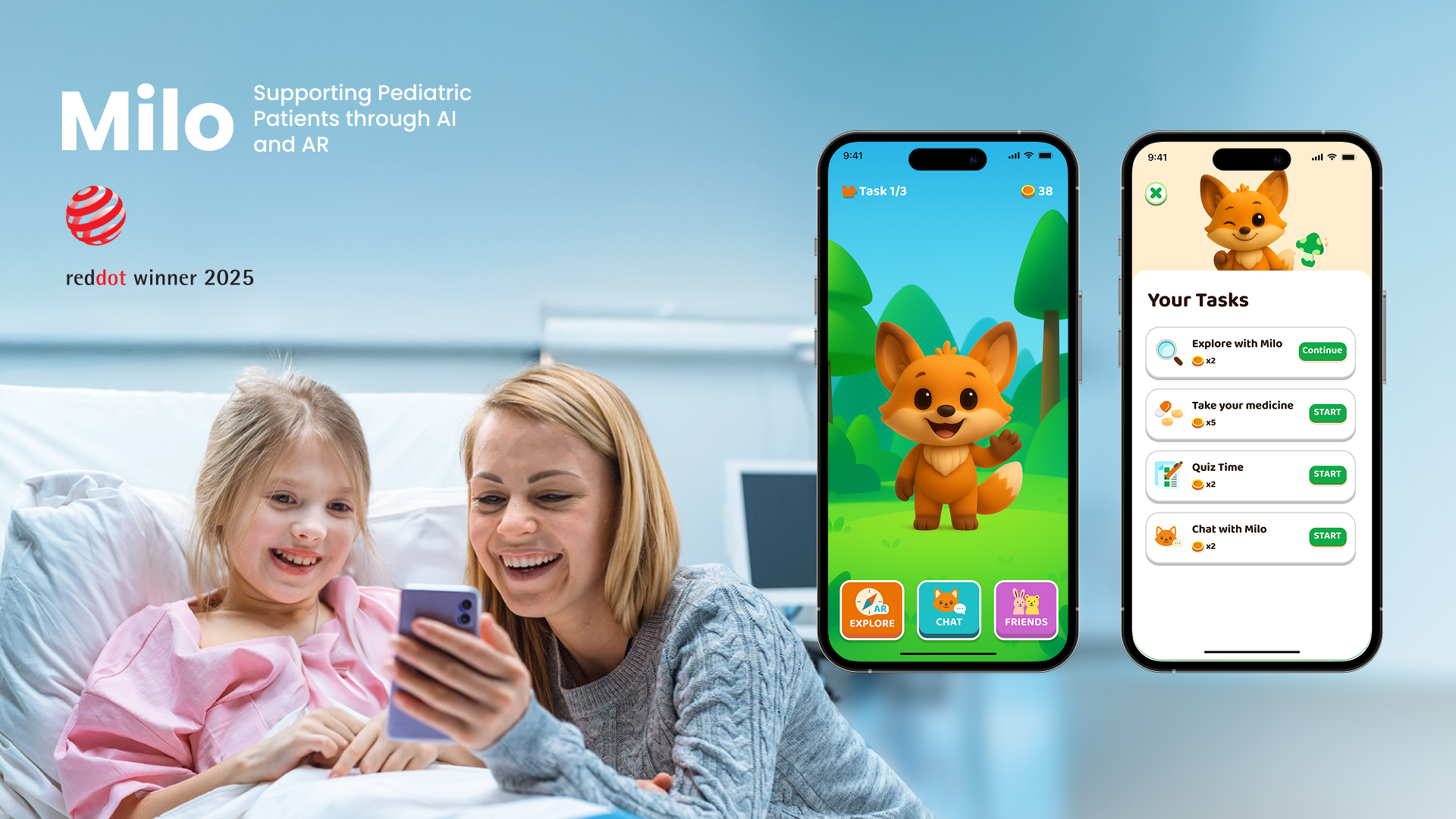
Impact
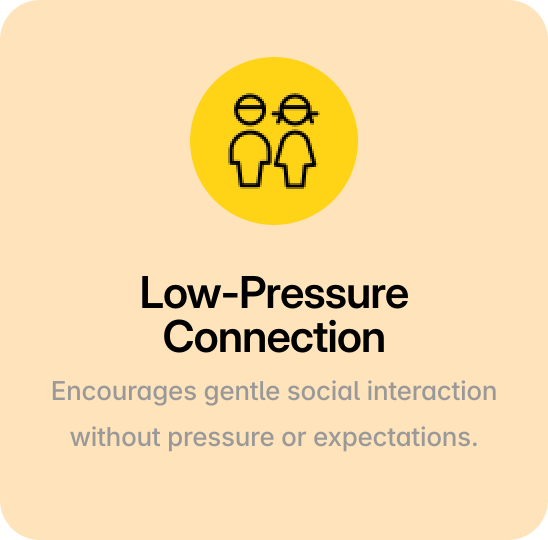
The final solution addresses emotional isolation by introducing continuous, low-pressure interaction through an AI companion. By combining engagement, routine support, and social connection, the design creates a more supportive care experience for children in long-term treatment.
Recognition
🏆 Red Dot Design Award Winner
This project was recognized for its innovative approach to emotional design in pediatric care.
What I learned from this project
Through this project, I learned to balance ambition with real-world constraints—focusing on delivering meaningful impact rather than perfection. I also realized the importance of validating problems early and testing ideas quickly, allowing for faster iteration and better decisions. Most importantly, I learned to prioritize methods and deliverables that directly support the user’s needs and the core problem.